
The Airframe
Participants examine how the frame supports the drone and how size, weight, shape, balance, and material affect performance.
Drone and Workforce Development
Gateways into aviation, engineering, mapping, geographic technology, construction, inspection, media, environmental monitoring, emergency preparedness, public safety support, entrepreneurship, and careers that are still being invented.
10
Ten young people have earned FAA Part 107 Remote Pilot Certificates through the growing 846s pathway. Certification is a professional milestone and proof that the pathway can move participants from first exposure into a federally recognized credential.
Hands On Drone Workshops
Flying a drone can inspire curiosity.
Building one reveals how the technology actually works.
In the 846s.org drone building workshops, young people move beyond operating a finished product. They work with frames, motors, propellers, flight controllers, electronic speed controllers, batteries, wiring, radio systems, cameras, and other essential components to assemble working drones from the inside out.
The experience transforms a drone from a mysterious flying object into a system that participants can examine, understand, troubleshoot, and eventually operate with greater confidence and responsibility.
We do not only teach young people how to fly technology. We help them understand what makes it fly.
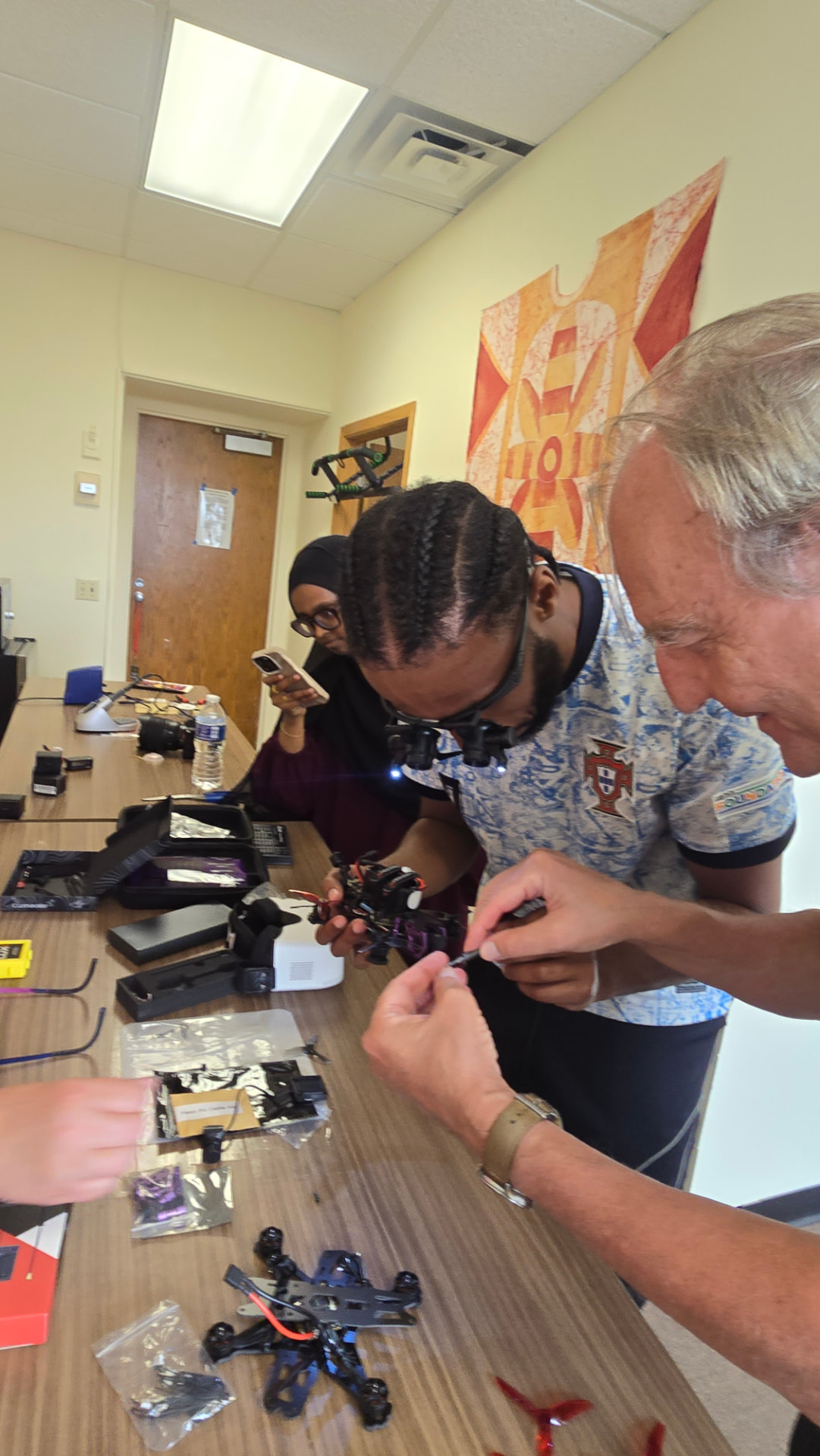
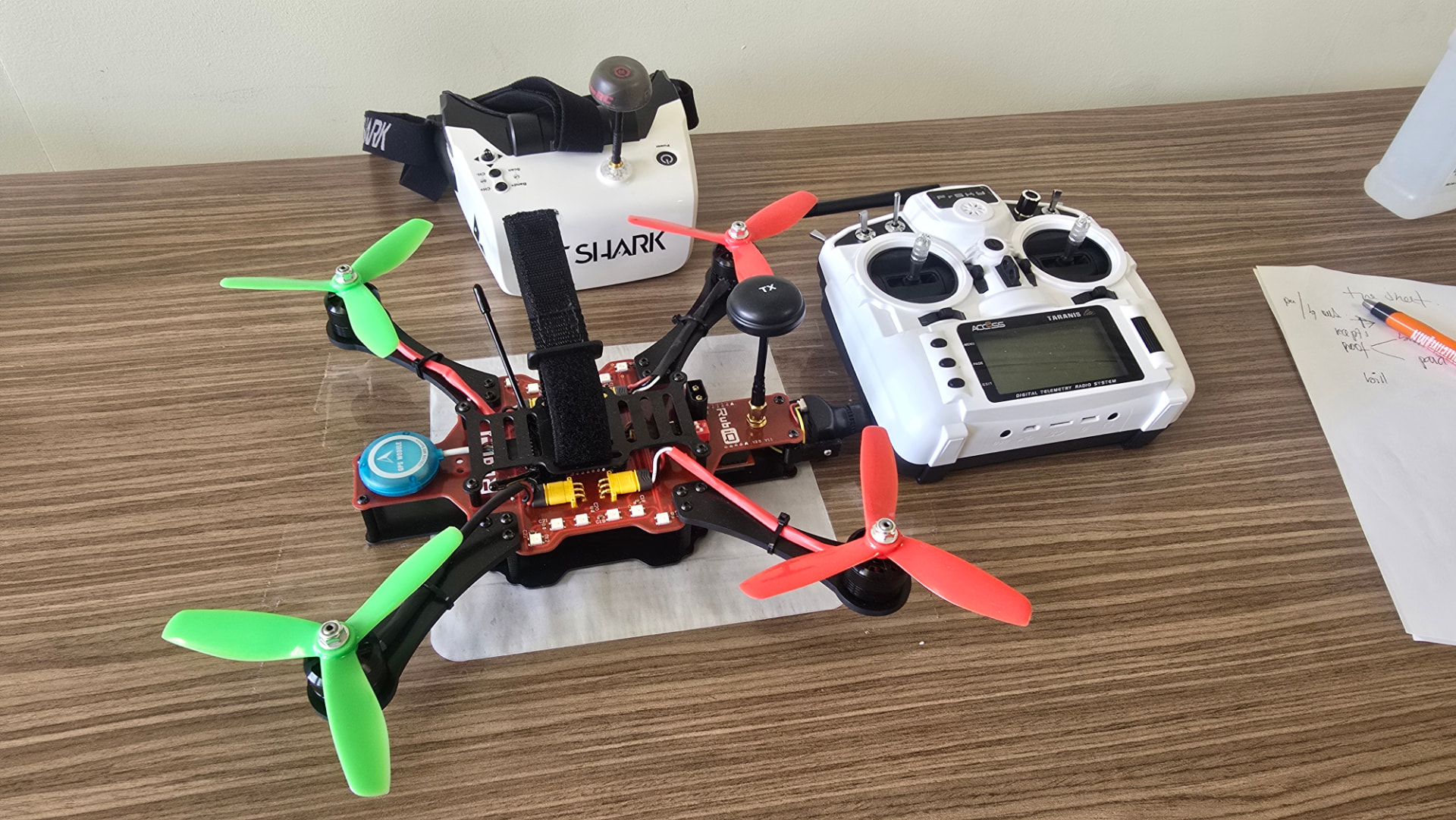
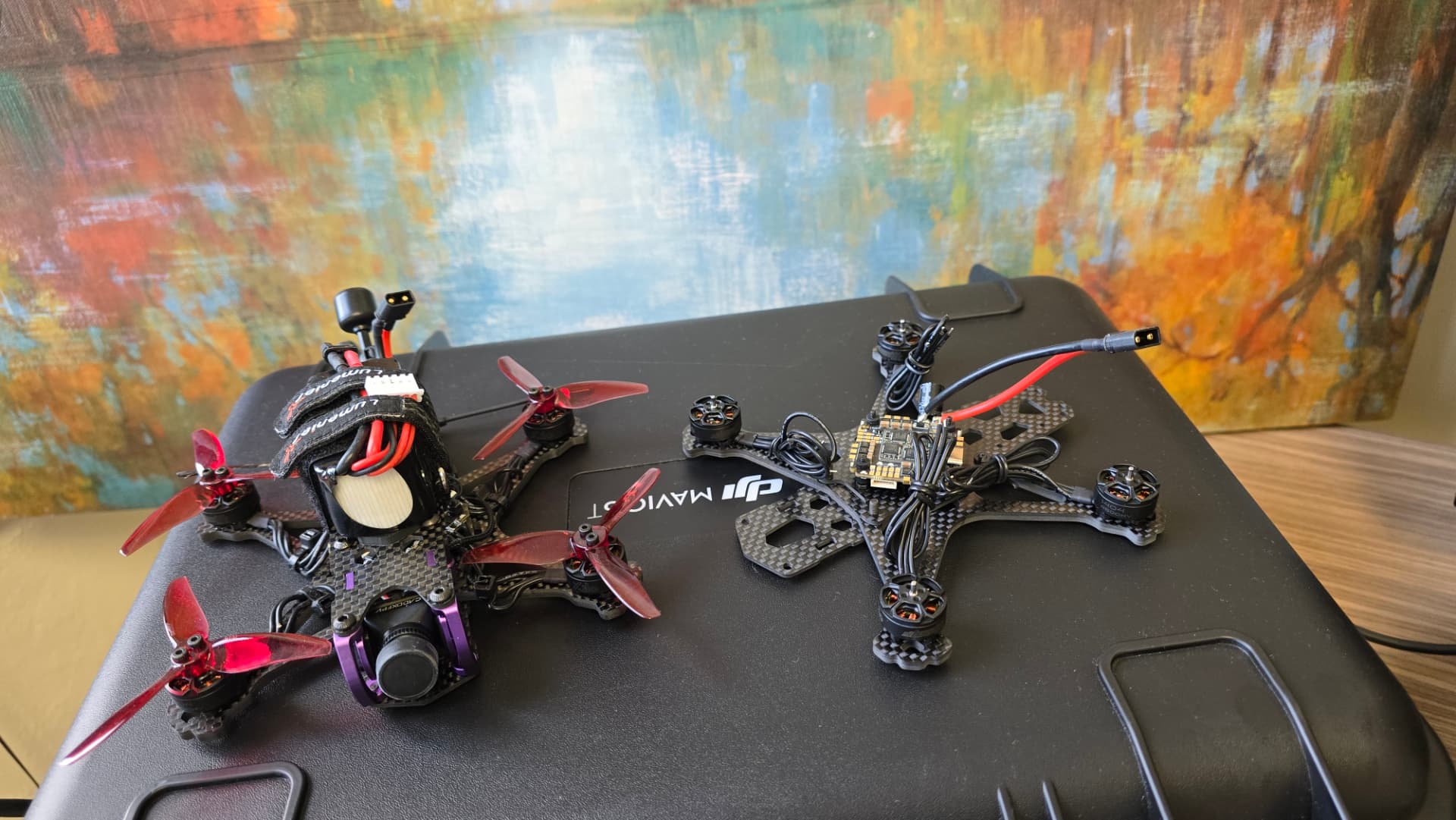
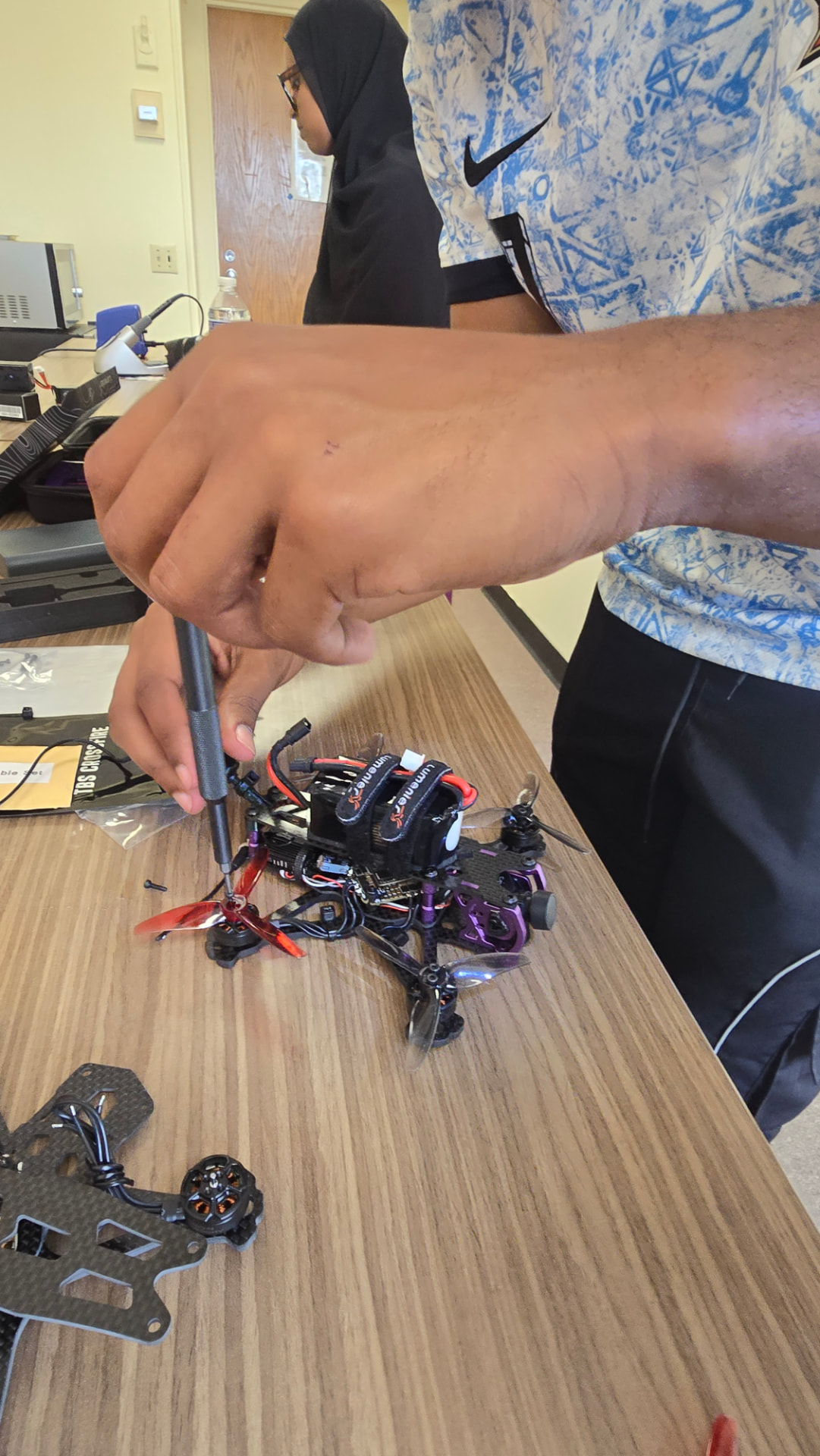
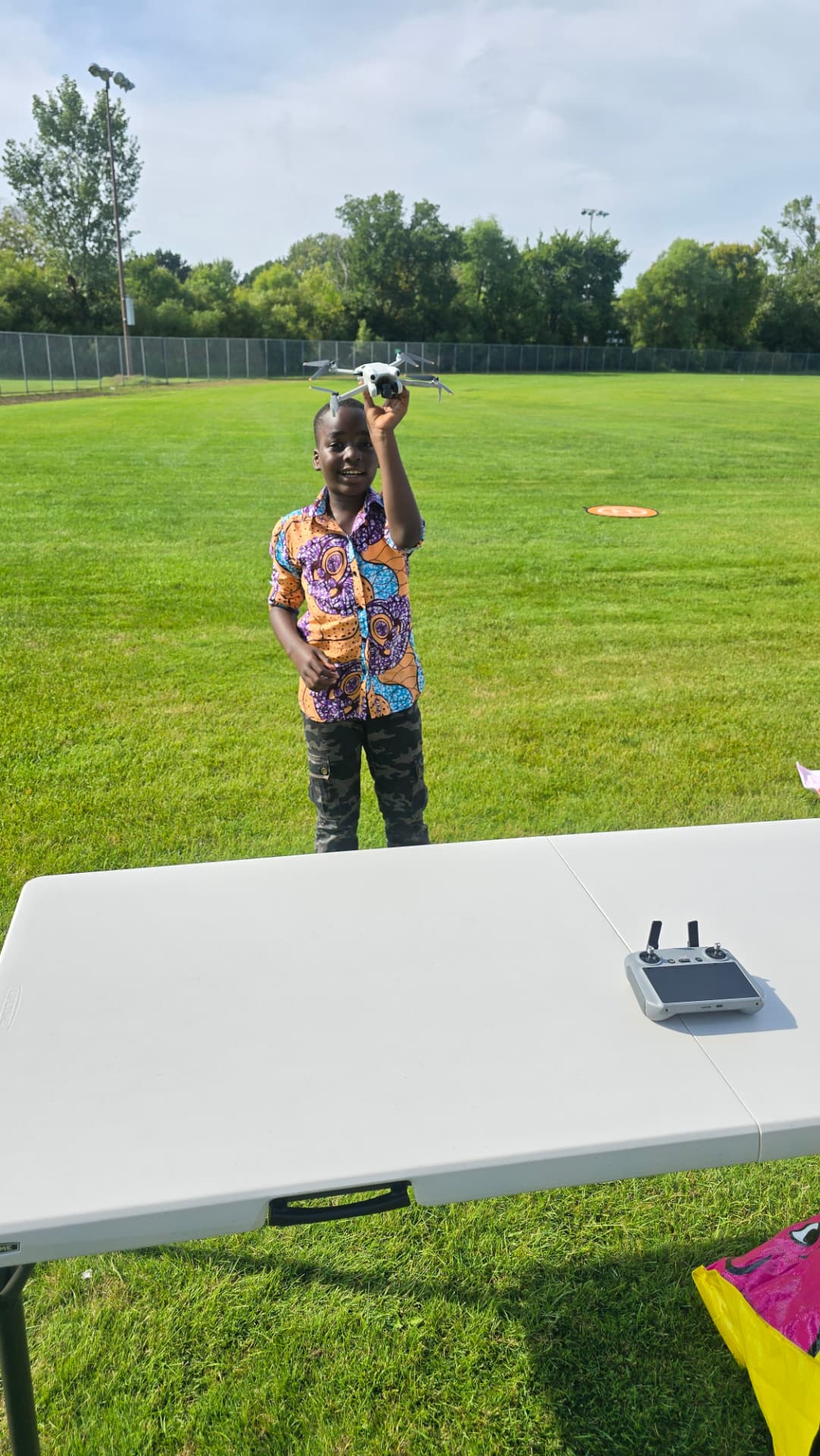
Each workshop invites participants to investigate the relationship between individual components and the complete aircraft.
Participants examine how the frame supports the drone and how size, weight, shape, balance, and material affect performance.
Participants explore how motors and propellers create lift, how rotation affects movement, and why correct placement and direction matter.
Participants learn how batteries, wiring, connectors, and electronic speed controllers distribute and manage power throughout the aircraft.
Participants discover how the flight controller acts as the central decision system, interpreting pilot commands and helping the aircraft remain stable.
Participants explore how radio transmitters, receivers, antennas, cameras, and video systems allow the pilot and aircraft to communicate.
Participants learn to follow instructions, identify connections, test systems, recognize errors, and work methodically when something does not function as expected.
A drone building workshop is about more than assembling parts.
Young people practice observation, mathematics, spatial reasoning, electronics, engineering, hand coordination, safety, communication, teamwork, and problem solving.
They learn that successful technology depends on understanding how individual components work together as one system.
When a connection is incorrect or a component does not respond, participants are encouraged to investigate rather than give up. A problem becomes information. A mistake becomes an opportunity to test, reflect, adjust, and try again.
This process builds technical confidence while helping participants see themselves as creators, problem solvers, and future professionals.
Skills developed
Drone building naturally creates moments of uncertainty, frustration, discovery, cooperation, and accomplishment.
These moments allow participants to practice Emotional Intelligence and African Inspired Emotional Intelligence in real situations.
Participants notice when they feel confused, excited, impatient, confident, or discouraged.
Participants learn to pause, examine the problem, and choose a thoughtful next step rather than reacting with frustration.
Participants remain connected to the goal of seeing separate components become a functioning aircraft.
Participants recognize when a teammate needs encouragement, additional explanation, or an opportunity to contribute.
Participants ask questions, share tools, communicate observations, divide responsibilities, and solve problems together.
Building a drone can introduce young people to a much larger world of learning and opportunity.
Participants begin to encounter concepts connected to aviation, electrical systems, robotics, engineering, computer science, radio communication, photography, mapping, public safety, infrastructure, environmental work, entrepreneurship, and emerging technology careers.
The workshop helps young people understand that technology is not something created only by people somewhere else.
They can open it. Study it. Build it. Repair it. Improve it. Use it responsibly. Imagine what might come next.
The workshop journey
Meet the aircraft and identify its major components.
Assemble the frame, motors, electronics, wiring, communication systems, and supporting components.
Explore the purpose of each component and how the systems depend on one another.
Test connections, identify problems, make adjustments, and learn from what does not work.
Review safety, balance, communication, power, and readiness before operation.
Connect technical understanding to safe and responsible flight practice.
Capture the building process, lessons, technical vocabulary, teamwork, and completed project in a participant portfolio.
Continue into flight training, mission planning, FAA Part 107 preparation, mapping, photography, storytelling, entrepreneurship, or other workforce pathways.
Participants should be encouraged to document their drone building experience as part of Portfolio Based Workforce Development.
A participant does not leave with only a completed drone. They leave with evidence that they can follow a process, understand a technical system, work with others, solve problems, learn from setbacks, and transform separate parts into something capable of flight.
Workshop learning connects directly into FAA Part 107 preparation and Portfolio Based Workforce Development within the same program.
846s.org can work with schools, youth programs, neighborhood organizations, community partners, and supporters interested in creating hands on pathways into drone technology, Emotional Intelligence, aviation, engineering, and workforce development.
No previous experience is required, and no one has to pursue certification to participate.
First contact with flight, in a park or a pop up, with no experience required.
Indoor simulation builds control and confidence before a drone leaves the ground.
Components, wiring, frames, and systems. Participants fly what they built.
Repeated, supervised practice until control becomes second nature.
Pre flight checks, risk assessment, and shared responsibility in the air.
Reading conditions, airspace classes, and the rules that keep operations legal.
Planning flights that begin with people, purpose, privacy, and community need.
Structured study, practice testing, coaching, and examination support.
Documenting work so employers and clients can evaluate it.
Real assignments with professional expectations and accountability.
Employer connections and continued mentoring. Outcomes are supported, never guaranteed.
Business fundamentals, compliance, pricing, and client relationships.
Certified participants return to teach, mentor, and open doors.
Community Mission Planning
A mission should begin with people, purpose, privacy, safety, community needs, and communication — long before anything takes off.
From Certification to Economic Mobility
Select a stage to see what a participant learns, what support 846s provides, what barriers may arise, and what partners can contribute.
Program pathways
Participants may enter the drone program through different experiences based on their interests, readiness, and goals.
Some begin with a public demonstration.
Others begin with building, simulation, outdoor flight, mission planning, FAA preparation, or a community project.
These experiences can connect over time, but they are not presented as enrollment in a formal academy.
Drone operations are rarely about one person holding a controller. Participants learn to work as a coordinated crew. One person may serve as pilot in command. Another may serve as visual observer, mission support, safety coordinator, or community liaison. Together they review the purpose of the mission, conditions, risks, responsibilities, community concerns, and desired outcomes. This approach develops technical competence, communication, trust, situational awareness, and shared responsibility.
Participants build professional portfolios through authentic community projects.